One of the most common fears international students have about credit is this: if I check my credit score, will it go down?
The short answer is no. Checking your own credit score never hurts it — not even once, not even if you check it every single day.
But there is a version of a credit check that does hurt your score, and many F-1 students accidentally trigger it when they are trying to do the right thing. Understanding the difference between the two types of credit checks is one of the most practical pieces of financial knowledge you can have in the US.
This guide explains exactly how to check your credit score for free, which tools work without an SSN, what the numbers on your report actually mean, and the one mistake you must avoid that does genuinely damage your credit.
The Difference Between a Soft Inquiry and a Hard Inquiry

Every time someone checks your credit, it is called a credit inquiry. There are two completely different types, and they have opposite effects on your score.
Soft Inquiries — Zero Impact on Your Score
Checking your own credit score is a soft inquiry and has zero impact on your score. You can check it as often as you want.
Other events that trigger soft inquiries include a landlord doing a background check before approving your rental application, an employer checking your credit as part of a job application in certain industries, and credit card companies sending you pre-approved offers in the mail.
Soft inquiries are recorded on your credit report but only you can see them — lenders cannot. They have no effect on your score.
This means you can check your credit score daily on Credit Karma, weekly on Experian, and monthly through your card issuer, all without affecting your score by a single point.
Hard Inquiries — Temporary and Small Impact
A hard inquiry happens whenever you actively apply for credit and a lender pulls your full credit report to make an underwriting decision. Common triggers include applying for a credit card, applying for a car loan, applying for an apartment in buildings that use formal credit screening, and applying for student loan refinancing.
A single hard inquiry typically drops a score by 5 points or fewer for someone with established credit. Credit card applications do not get any deduplication treatment — each application is its own hard pull.
Hard inquiries stay on your credit report for two years but their scoring impact fades significantly after the first 12 months. Legitimate hard inquiries that you actually authorized cannot be removed — they fall off automatically after 24 months.
The practical rule for international students: check your own score freely and as often as you like. Apply for new credit accounts only when you are ready and have researched your approval odds, because each application triggers a hard inquiry.
Why Checking Your Score Regularly Is Actually Important

Many international students assume that not checking their score is the safe option. In reality, not checking it is the riskier approach.
The Federal Trade Commission found that 1 in 5 consumers had an error on at least one credit report. These errors can drag down your score and cost you thousands in higher interest rates over time.
For international students specifically, credit report errors are more common than average for two reasons. First, your name may be spelled differently across documents — passport, I-20, bank account — and the bureaus sometimes create duplicate files or misattribute accounts. Second, if your ITIN is similar to someone else’s identifier, there is a small risk of mixed files where another person’s negative information appears on your report.
Regular monitoring is how you catch these problems early, before they affect a rental application, a credit card approval, or a car loan.
The 5 Best Free Tools to Check Your Credit Score as an International Student

1. AnnualCreditReport.com — Your Official Free Credit Report
AnnualCreditReport.com is the only federally mandated free credit report website, authorized by the FTC, CFPB, and all three major bureaus. As of 2023, weekly free reports from all three bureaus are permanently available.
This is the most important resource on this list. It gives you your full credit report — every account, every payment history, every inquiry — from Experian, TransUnion, and Equifax separately.
What it does not give you is your credit score number. It shows you the full report — all the data behind the score — but not the three-digit number itself. Use it to verify that your accounts are reporting correctly and that no errors or fraudulent accounts have appeared.
Important for international students: AnnualCreditReport.com accepts ITIN in place of an SSN for identity verification. If you do not have either, you may need to request your report by mail using your passport as identification.
2. Credit Karma — Free VantageScore Updated Frequently
Credit Karma is the most widely used free credit monitoring tool in the US. It gives you your VantageScore from TransUnion and Equifax for free, updated regularly, with no credit card required to sign up.
NerdWallet offers free credit scores and reports. You can sign up with an ITIN and see your credit score from Experian. Credit Karma operates similarly — you can create an account using your ITIN if you do not have an SSN.
Credit Karma is genuinely useful for tracking the direction of your score over time and for confirming that your credit accounts are reporting correctly. It also shows you which factors are helping or hurting your score, which is valuable when you are in the active credit-building phase.
One important limitation: Credit Karma shows your VantageScore, not your FICO Score. Most lenders use FICO. A VantageScore of 700 does not translate directly to a FICO Score of 700 — the two models use the same scale but weight factors differently. Use Credit Karma to monitor direction and catch errors, not as the definitive number a lender will see.
3. Experian Free Account — Direct Access From the Bureau
Experian offers a free account at experian.com that gives you direct access to your Experian credit report and an Experian credit score. You can sign up with your ITIN at Experian.com to access your credit report and score directly from the bureau.
The advantage of checking directly through Experian is that you are seeing your data as the bureau holds it — not through a third-party aggregator. If there is an error on your Experian file, you can dispute it directly within the same platform.
Experian also offers a feature called Experian Boost that can add alternative payment data to your credit file. Experian Boost helps you build credit by including recurring payments like rent, utilities, and streaming services in your credit report, giving you credit for bills you already pay without taking on new debt. This is particularly useful for international students who have limited credit history but have been paying rent and utilities on time.
4. Your Credit Card Issuer — Free FICO Score
Several card issuers include a free FICO Score as part of their cardholder benefits — and unlike Credit Karma, these are actual FICO Scores, the same type that most lenders use.
Discover provides a free FICO Score 8 to all cardholders including Discover it Student cardholders, updated monthly. This is available even to non-Discover customers through the Discover Credit Scorecard program at creditscorecard.com. Discover Credit Scorecard is free even if you are not a Discover customer. It shows your score and explains the factors affecting it. You will need an ITIN to set up your account. Backlinko
Capital One also provides free credit monitoring through CreditWise, which is available to anyone — not just Capital One customers — and does not require an SSN to access.
5. Equifax Free Account — Best Option for ITIN Holders
Equifax stands out as the top choice for ITIN holders. It offers online registration at my.equifax.com where you can enter your ITIN in the SSN field. It provides a free VantageScore 3.0 and your complete credit file once per month.
For international students who have not yet obtained an SSN, Equifax’s ITIN-friendly registration process makes it one of the most accessible options for getting a full picture of your credit file.
What to Look for When You Check Your Report

Knowing how to access your credit report is the first step. Knowing what to look for when you read it is equally important.
Section 1 — Personal Information
Verify that your name, address, and date of birth are correct. For international students, name variations between your passport and other documents can sometimes create issues. If your name appears differently than expected, contact the bureau to correct it.
Section 2 — Account History
This section lists every credit account you have or have had, including credit cards and loans. For each account, the report shows the current balance, credit limit, payment history month by month, and account status — open, closed, or delinquent.
Check that every account listed actually belongs to you. Verify that payment histories are accurate — on-time payments should show as current, and you should see no missed payments that did not actually occur.
Section 3 — Credit Inquiries
Your report separates hard inquiries from soft inquiries. Hard inquiries from the past 12 months can affect your score. Any hard inquiries you do not recognize should be investigated immediately — they are a common early indicator of identity theft.
If you see a hard inquiry from a lender you never applied to, do not ignore it. Contact the lender directly and file a dispute with the credit bureau if the inquiry is unauthorized.
Section 4 — Public Records
This section would show bankruptcies or court judgments. For most F-1 students, this section will be empty — which is exactly what you want.
How to Dispute an Error on Your Credit Report
If you find an error — an account that is not yours, a payment marked late that you paid on time, or a balance that is incorrect — you have the legal right to dispute it under the Fair Credit Reporting Act (FCRA).
The process is straightforward. File your dispute directly with the bureau that shows the error — Experian at experian.com/disputes, TransUnion at transunion.com/credit-disputes, or Equifax at equifax.com/personal/disputes. Describe the error clearly and attach any supporting documentation such as bank statements showing the payment was made on time.
Creditors are required to correct mistakes in compliance with the Fair Credit Reporting Act if you can provide proof that the reported information is inaccurate. The bureau is required by law to investigate and respond within 30 days.
The One Mistake That Actually Does Hurt Your Credit
Now that you know checking your score is completely safe, here is the mistake that many international students make thinking it is the same thing — but is not.
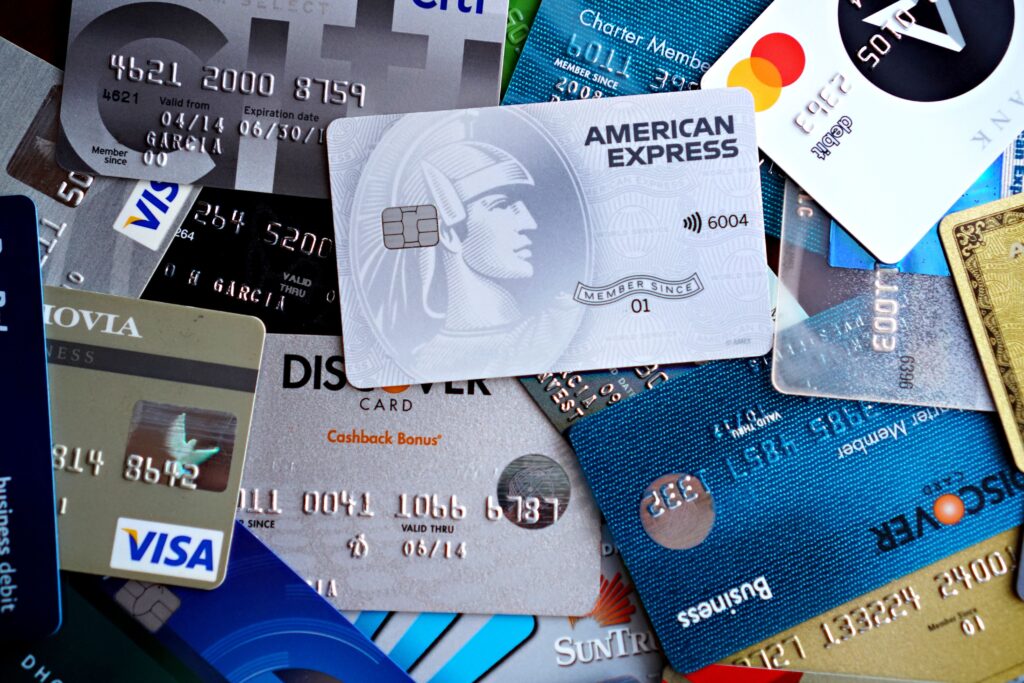
Applying for a credit card to see if you get approved is a hard inquiry. It is not a soft inquiry. If you apply for three cards in the same week to find out which one will approve you, you have just generated three hard inquiries that each reduce your score temporarily and stay on your report for two years.
The correct approach is to use pre-qualification tools before applying. Most major card issuers offer pre-qualification tools that use a soft pull to estimate your approval odds before you formally apply. Space out applications and do not apply for multiple cards in the same week — two or three hard inquiries in 30 days can compound into a noticeable score drop.
Before applying for any credit card, use the issuer’s pre-qualification tool on their website. If the pre-qualification result looks favorable, then submit the formal application. If it does not look favorable, save yourself the hard inquiry and look for a card better suited to your current credit profile.
How Often Should You Check Your Credit Score?
There is no rule that says checking too often causes any problem. Here is a practical monitoring schedule that works well for F-1 students actively building credit.
Once per week check your Credit Karma or similar dashboard to confirm no unauthorized activity and to track the direction of your score. This takes about two minutes and gives you early warning of any suspicious activity.
Once per month review your credit card statement and confirm the balance reported to the bureaus matches what you expect. If your card reports before you pay your statement, check that the reported balance reflects your low utilization strategy.
Once every four months pull a full credit report from one of the three bureaus through AnnualCreditReport.com. Since you can pull from each bureau separately, rotating through Experian, TransUnion, and Equifax every four months gives you effectively year-round full coverage of all three reports at no cost.
Immediately after any significant financial event — applying for a new account, moving to a new address, or if you suspect identity theft — pull your full report from all three bureaus at once.
Frequently Asked Questions
Does checking my credit score on Credit Karma hurt my credit?
No. You can check your own credit as often as you like without any impact on your score. Checking your own score is a soft inquiry by definition and has zero effect on your FICO or VantageScore. Only hard inquiries triggered by formal credit applications affect your score.
Can I check my credit score as an international student without an SSN?
Yes. Several free tools accept an ITIN in place of an SSN, including Credit Karma, NerdWallet, Experian, and the Discover Credit Scorecard. If you do not yet have an ITIN, you can request your full credit report from AnnualCreditReport.com by mail using your passport as identification.
How long does a hard inquiry stay on my credit report?
A single hard inquiry typically only lowers your score by 5 to 10 points and falls off your report after two years. Its impact on your score diminishes significantly after the first 12 months and becomes negligible in the second year. The key is not to accumulate multiple hard inquiries in a short period, which can compound the effect.
This article is for informational purposes only and does not constitute financial advice. F1 FINANCE HUB is not a licensed financial advisor. Always verify current terms and product availability directly on the relevant platform’s official website before creating an account or applying for any financial product.
Acerca del autor